Chapter 01
🛣️ General definitions and road duties
The Italian Highway Code (Legislative Decree 285/1992) defines fundamental terms and establishes the duties of all road users. Understanding these definitions is essential for grasping the rules of road traffic.
Definitions of Road and Carriageway
A road is the area designated for the movement of pedestrians, vehicles and animals. Roads are classified as:
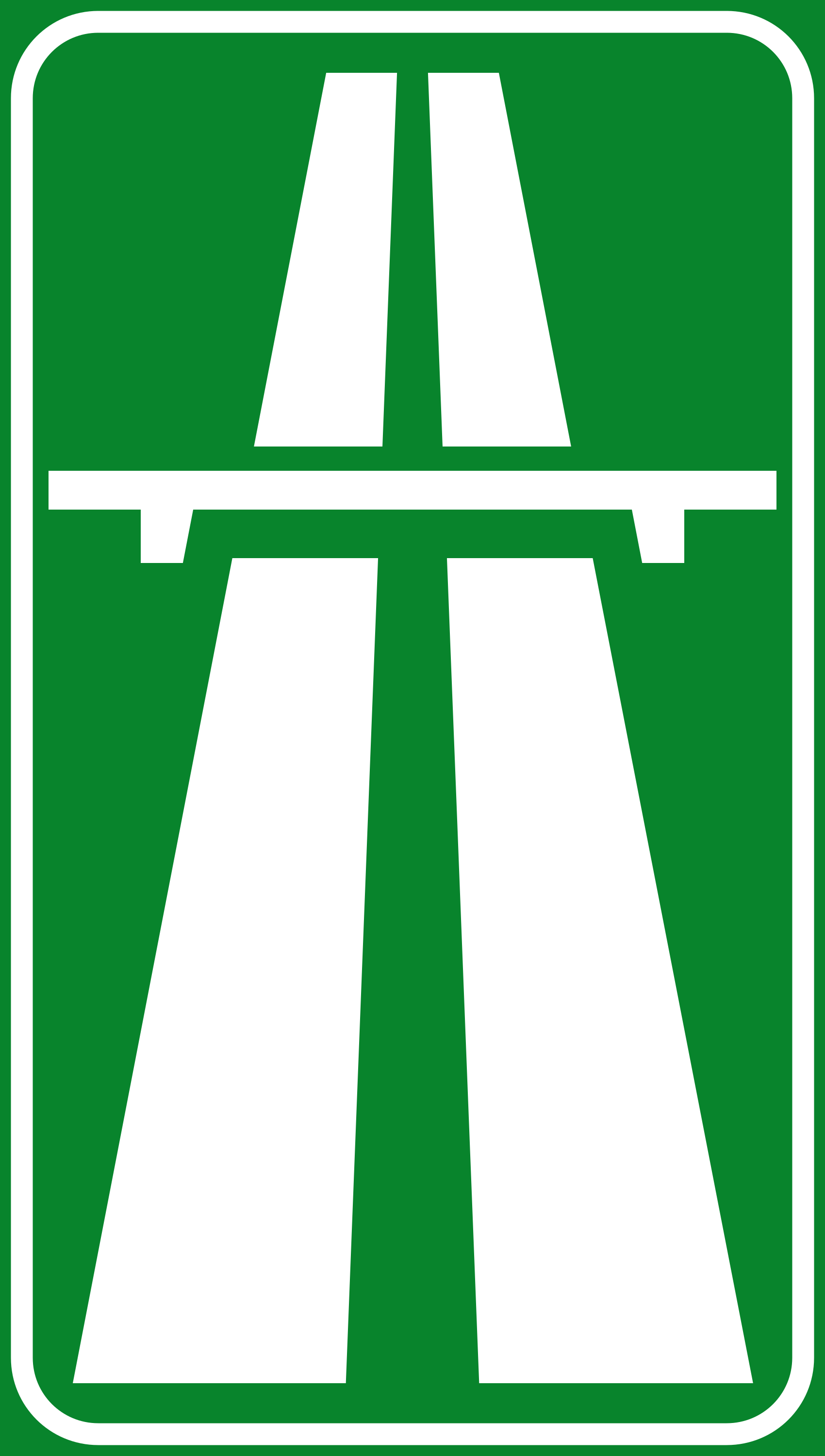
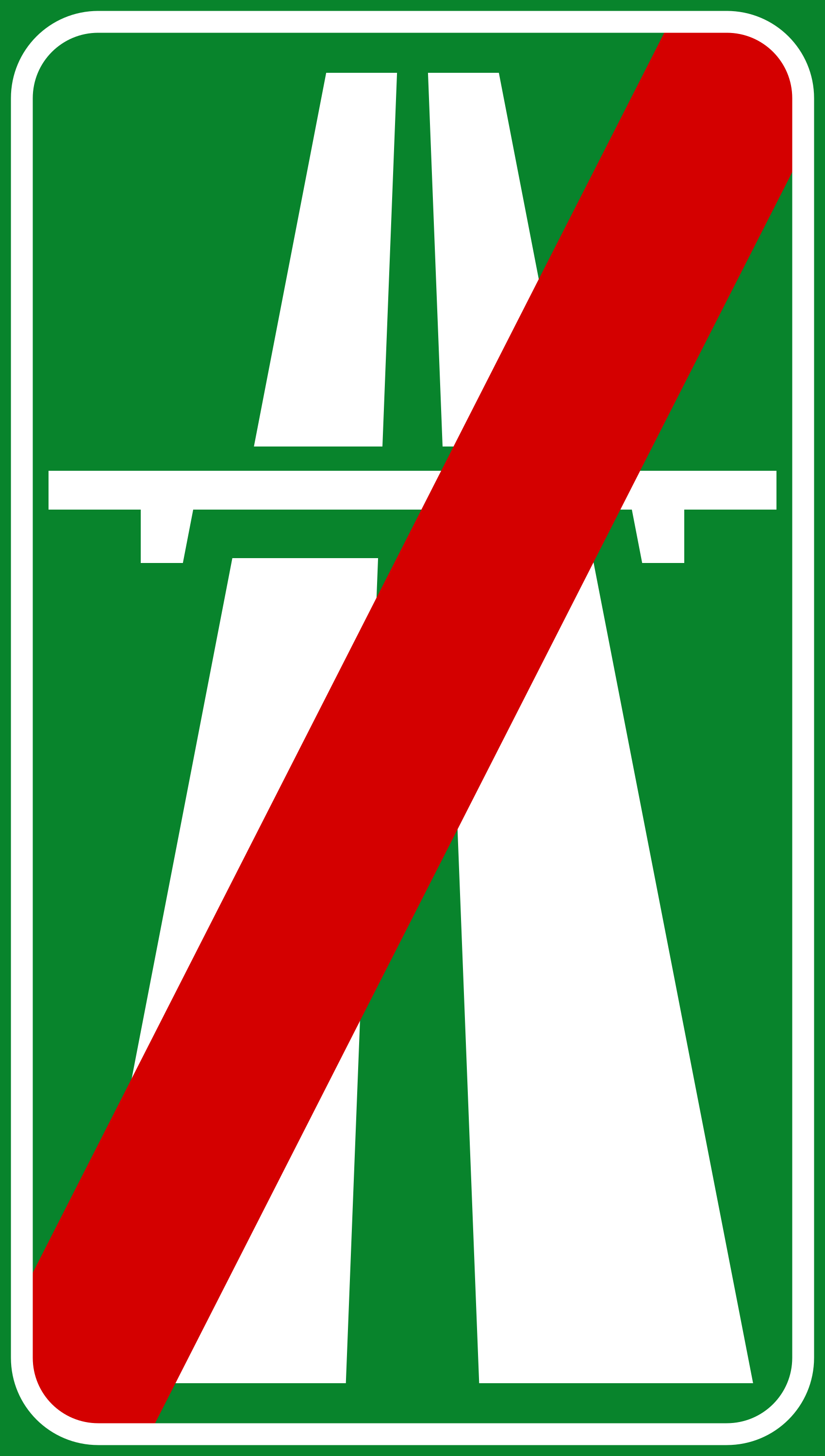
- Motorways (Autostrade): dual-carriageway roads with limited access, no level junctions. Maximum speed 130 km/h.
- Primary extra-urban roads: dual-carriageway with controlled access. Speed limit 110 km/h.
- Secondary extra-urban roads: single carriageway. Speed limit 90 km/h.
- Urban expressways: dual-carriageway within urban areas. Speed limit 70 km/h.
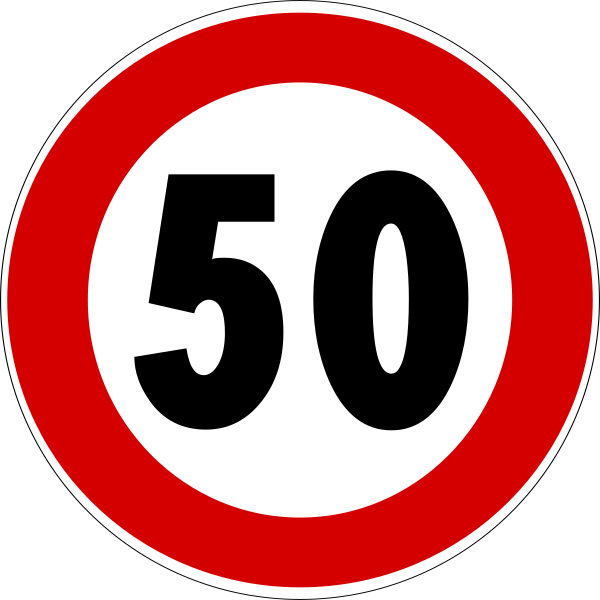
- Urban district roads: single carriageway. Speed limit 50 km/h.
- Local roads: urban and extra-urban. Speed limit 50 km/h in towns.
The carriageway is the portion of the road intended for vehicle flow. A road may have multiple carriageways separated by a central reservation.
A lane is the portion of the carriageway intended for a single line of vehicles.
Vehicle Definitions
The Highway Code classifies vehicles into specific categories:
- Mopeds (Ciclomotori): 2- or 3-wheeled vehicles with engine ≤ 50 cc and max speed 45 km/h.
- Motorcycles (Motoveicoli): motor vehicles with 2, 3 or 4 wheels with engine > 50 cc or max speed > 45 km/h.
- Motor cars (Autoveicoli): motor vehicles with at least 4 wheels (excluding motorcycles).
- Lorries (Autocarri): vehicles for carrying goods with a mass > 3.5 t.
- Buses (Autobus): vehicles for carrying persons with more than 8 seats.
- Trolleybuses (Filoveicoli): electrically powered vehicles drawing current from overhead lines.
- Trailers (Rimorchi): unpowered vehicles towed by other vehicles.
- Agricultural machinery: vehicles for agricultural use.
Driver Duties
Every driver has specific duties enshrined in the Highway Code:
- Vehicle control: keep both hands on the wheel at all times, maintain correct posture and full control of the vehicle.
- Obey signage: comply with road signs, traffic lights and instructions from traffic officers.
- Compulsory documents: driving licence, vehicle registration certificate and insurance certificate must always be available.
- Physical/mental fitness: it is forbidden to drive under the influence of alcohol or drugs.
- Safety devices: mandatory use of seatbelts and helmets for motorcyclists.
- Mobile phones: it is forbidden to use a hand-held mobile phone while driving.
⚠️
Remember: The driver is responsible for the vehicle's behaviour. In the event of an accident, they are obliged to stop and render assistance.
Key Definitions from the Code
- Intersection: a road node where two or more roads meet or cross.
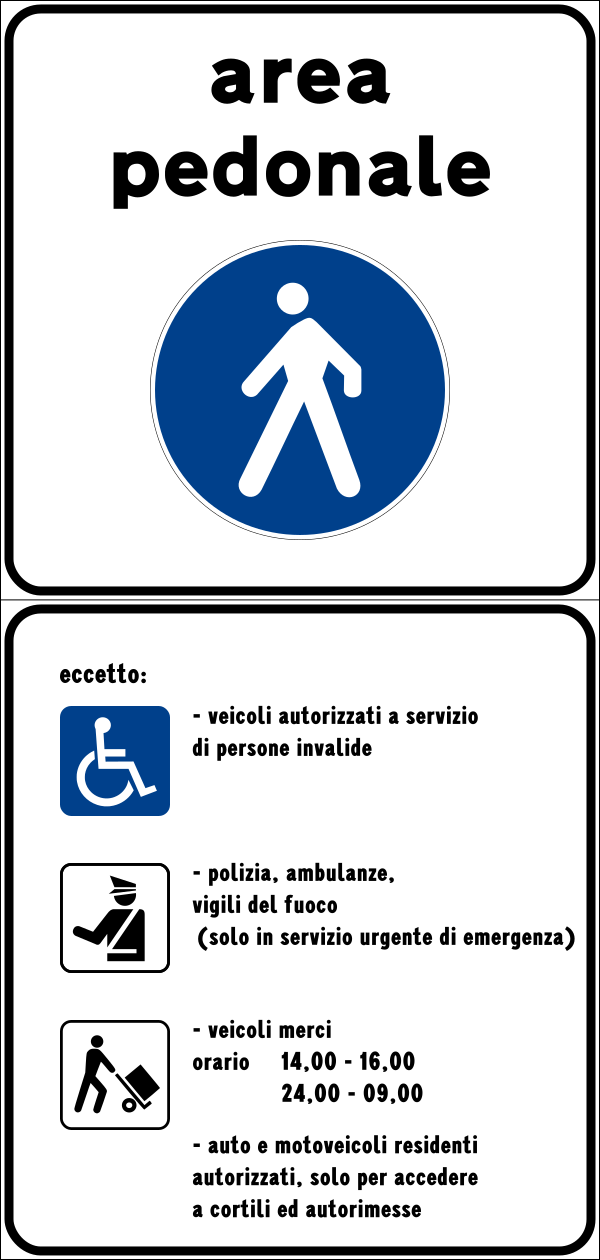
- Pedestrian area: a zone closed to vehicle traffic except where specified.
- Limited Traffic Zone (ZTL): an area where access is limited to certain categories of vehicle.
- Built-up area: a set of buildings with roads, squares or other public spaces, marked by beginning and end signs.
- Pavement (Marciapiede): the part of the road separated from the carriageway, reserved for pedestrians.
- Verge (Banchina): the part of the road between the edge of the carriageway and the nearest obstacle.
- Central reservation (Spartitraffico): a stripe or raised element dividing carriageways or lanes in opposite directions.